

Spain might not be the first name that comes to mind when you think of fashion capitals — and honestly, that's part of what makes it so interesting. Having lived here for a while now, I've slowly come to realise just how much this country contributes to the way the rest of the world dresses, often without much creditation.
An obvious point to start with is that Spain is home to one of the biggest fast fashion headquarters in the world; Inditex. We all know it from the stores Zara, Bershka, Pull & Bear, Massimo Dutti etc. This huge cooperation is headquartered in a tiny village in Galicia called Arteixo, the northwest coast of Spain.
In this article, we take a deep dive into the world of Inditex — one of the most powerful fashion conglomerates in the world. Along the way, we sit down with a designer who worked firsthand within the corporation of Zara, giving us an inside look at what that experience is truly like. We also shine a light on some of the beloved brands that live under the Inditex umbrella, while making sure to celebrate the smaller, independent Spanish brands that deserve just as much recognition, Because we believe that being a fashion capital isn't just about big names and commercial perfection — it's about craftsmanship, history and what the place has done for the fashion world. Great style is builded on roots, and Spain's roots run very veep!

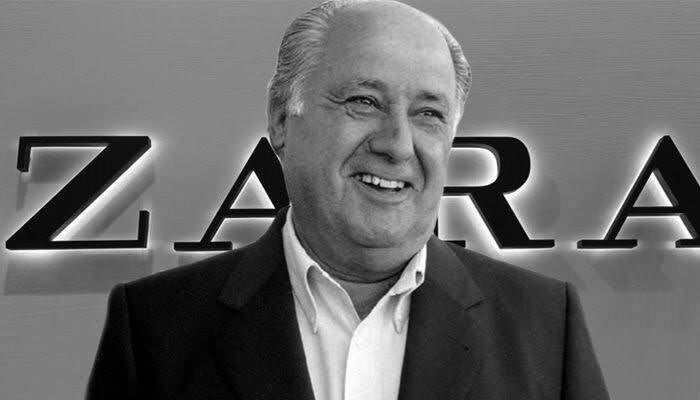
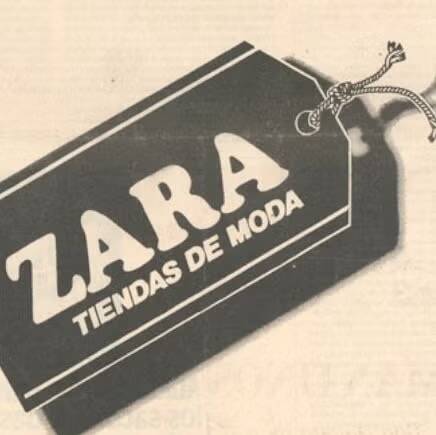
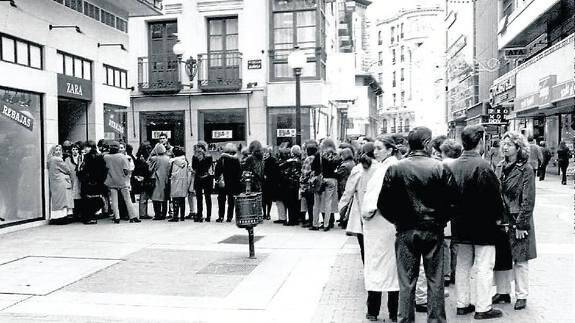
Because style comes from roots, and Spain has been growing those roots for a very long time!
Let's start this article off with a little bit of a deeper dive into the company Zara, which did after all cause the whole start of the empire of Inditex.
Amancio Ortega was a little boy that grew up in a very poor family in a little town called Busdongo de Arbás. Upon relocating to the city of A Coruña at around the 1950s, Amancio made the decision to drop out of school and start working to support his family. At this point Amancio was only 13 years old.
He started working in different places but ended up managing a clothing shop that mostly catered to the wealthy clientele. At this place he started to realise that only an incredibly small portion of the community is actually able to dress in those clothes and it made him wonder, why can't everyone dress well? This is where the whole philosophy of Zara started; high-fashion looks at affordable prices, with clothing that moved fast and changed often.
Before this actually turned into Zara, he did experience multiple failed businesses. Amancio started two business that failed, showing this all did not necessarily came natural. The first company that actually experienced success was called Confecciones GOA, this was a manufacturing business where he made simple garments, mostly nightgowns, pyjamas and bathrobes, and selling these to retail stores. This worked for a while but what he really wanted to do was sell directly to the customer and eliminate the middle man.
So he wanted to start a new store called Zorba, named after the Zorba the Greek (1965) movie. But there was already a bar nearby with the same name, and the owner wasn't happy about it. With the letter moulds for the sign already made, Ortega simply rearranged the letters and landed on Zara — and the name stuck
The Start of INDITEX
After about ten years of Zara's success, Amancio, together with his brother and his partner, began brewing up a new idea. By the early 1980s, Zara was doing exceptionally well, but with that success came a problem that Amancio could no longer ignore. The business had grown so much that its chains were becoming long and complicated — materials, production, transportation, all arranged through so many different entities that the whole operation was beginning to lose its efficiency. He knew something had to change.
So in 1985, he created a holding company and called it Inditex, standing for Industria de Diseño Textil. With this new structure in place, he could finally bring all the necessary parts of the business chain under one single roof. There was officially no more middleman. Design, production, distribution, and selling were now all in the hands of Amancio Ortega — and with that, the empire truly began. A holding company that to this day stands as one of the most powerful and influential forces in the fashion world.
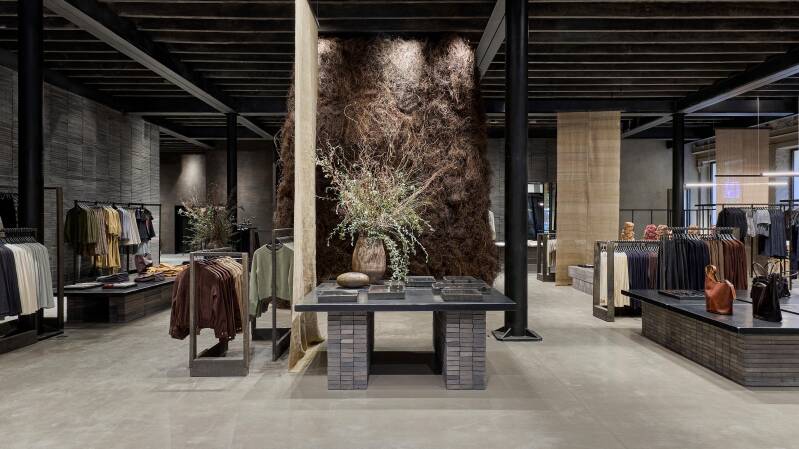
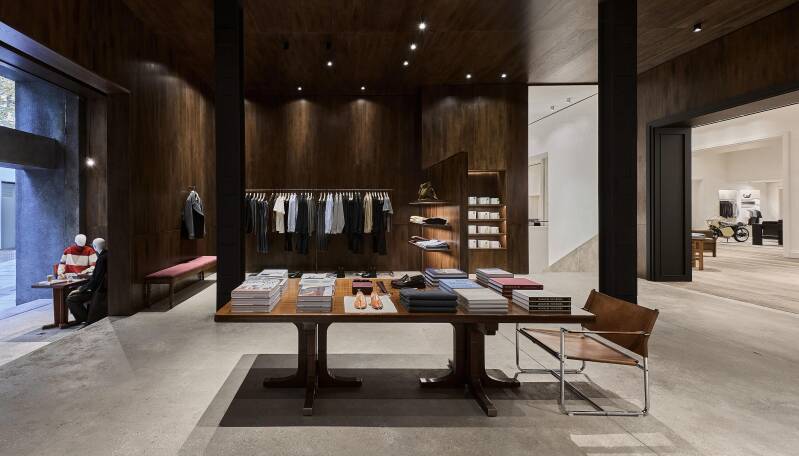
These are the insides of the new Zara store on Calle de Serrano in Madrid. One of the biggest luxury streets in Madrid. Here we can really see the mimicking Zara does of high- end brands. This feels like you are going to pick up a shirt worth 500 euros but actually it is just 49,95,-. The feeling that Zara gives feels inclusive, that everyone can experience that boutique like shopping.
Behind the Seams
An interview showing the insides of global business Zara
As part of this article we really wanted to include an interview with someone who has personally worked in and seen the insides of a huge company such as Zara. So we went to someone we know from the industry and tried to pull out as much information as possible! She is the coolest person and so fun to do our very first interview with and while she stayed super respectful to the company, she wasn't afraid to share her real, raw experience working as a designer at a Zara supplier for a year!
"Zara's operation is like clockwork" — a logistical marvel that takes a garment from sketch to shop floor in as little as 18 to 30 days. Our inside source explains that suppliers are spread across Europe by their specialty — Turkey for jersey and wool, Portugal for cotton and sportswear — and we learned that in some cases it's the suppliers, not Zara, who carry the financial risk of production.
"Zara is on the stock market. It always needs to make a profit. Everything — the design, the selection, the feedback from stores — it all comes back to that."
The creative process offers little room for personal expression. Designers take direct inspiration from the runway, reinterpreting rather than originating. Around 100 designs a week are created; yet only roughly 20 get manufactured; only a handful make the final cut.
What competitors simply can't replicate is the full ecosystem — and the feeling Zara manages to sell alongside its clothes. Stores sit in high-end locations, often in buildings the company owns outright, styled like boutiques with imagery that reads closer to luxury than fast fashion.
"They sell an emotion. You walk in and it feels like something else."
Others have tried to copy it, but the designer is sceptical the formula can simply be replicated. "You can't copy the machine. The history is important. They've been doing this since the eighties." That history is inseparable from where Zara comes from — a country where textiles have always moved through the ports and fashion is woven into daily life, much like food and the city itself. The brand was built from the start with a global mentality, but priced for everyone.
After a year inside that machine, our friend moved on —she is still wearing a jersey from her season at Zara, a quiet footnote to the hundreds of designs that passed through her hands.
"In a small company you have more time for inspiration. More time per garment. More details. More love."
What I loved about hearing her talk is that it made me realize that the journey of being a designer for Zara in the end gave her so many insights and respect. Insights about what she wants and doesn't want. And also respect for the big machine that Zara is... and respect for the smaller brands that need to compete to stay in this game.
Eva.
Expanding the Horizons of INDITEX
After getting Zara and Inditex up and running, Amancio wanted to grow his business even further. He realised that the same idea of cutting out the middlemen could work for other brands too. So after five years of focusing purely on Zara, Inditex started building and buying other brands.
In 1991, they created Pull & Bear from scratch. That same year, they bought 65% of Massimo Dutti, and within the next five years they bought the remaining share to own it completely. In 1998, they built yet another brand of their own — Bershka. Stradivarius was a little different though, as it was originally a brand from Barcelona that wasn't part of Inditex, but by 2005 they had fully bought it out and brought it into the group. All in all, Inditex knew what they wanted and they always got it! I am personally very impressed by the almost monstrous approach they have!
Discovering Brands and Realising they are Spanish
I already loved Massimo Dutti before i moved to Spain. The truth is I assumed it was Italian, because it sounds Italian.
Massimo Dutti is founded in 1985 in Barcelona. Originally the brand focused only on menswear. In 1995 it expanded into women’s fashion as well.
I must admit it was a bit of a dissapointment when i discovered it was part of Iditex, i guess it makes the brand feel a bit more 'mainstream' or 'large-scale' and they didnt give me that vibe before.
Having said that, i still love their clothes so much - it is hard for me to go in and not find something, Especially their knitware and their trousers are always giving me that idea that they are 'just perfect'.

Both images are from the recent Massimo Dutti collection

The Talents of Spain Oustide of INDITEX
Although Inditex and the brands within it are huge, impressive and influential, there are plenty of absolutely goooorrrgeous brands that originate from Spain. One of these, which we (especially Eva) are so in love with, is Adolfo Dominguez; one of Spain’s most iconic fashion brands, founded in 1976 by Spanish designer Adolfo Domínguez from Galicia.

Don Johnson and Philip Michael Thomas dressed in Adolfo Dominguez in the iconic series from the 80's Miami Vice
The brand became internationally known in the 1980s for its relaxed, intellectual style and the famous slogan:
“La arruga es bella” — “Wrinkles are beautiful.”
The brand was especially in the beginning all about natural fabrics like linen and clothing that looked lived-in, soft and effortless.
While diving in its history I discovered it was one of the first Spanish fashion brands to expand internationally with own-brand stores in cities like London, Paris and Tokyo in the 1980s.
The clothes appeared in the TV series Miami Vice, which helped make the relaxed linen look internationally fashionable. (I grew up watching this show and I remember how impressed I was with these looks; the soft pink for men, the combo of a t- shirt with a suit...absolutely loved it and I still do)
Long before sustainability became fashionable, the company focused on natural fabrics, longevity and anti-overconsumption messaging.
Today the company is run by his daughter, Adriana Domínguez, and the brand has repositioned itself as a more modern, sustainable premium label. It now has around 370–380 stores and points of sale across more than 50 countries, how impressive is that!
Shop Adolfo Dominguez here
While we are on the topic of Adolfo Dominguez, we also really want to mention the independent brand which we are BOTH insanely obsessed with, and we probably have mentioned in other blogs: Bimba Y Lola. I mean I, Lola, initially just found it interesting because it has my name in it (horrible narcissistic trait...), but the more we went and the more we saw the different collections we became bigger and bigger fans. So the funny thing is that the two sisters who created Bimba Y Lola, Maria and Uxia Dominguez were actually the nieces of Adolfo Dominguez.
So honestly I think it runs in the family because what a coincidence that these two brands come from the same roots.
While, so inherently different! Bimba Y Lola is known for their bright colours and patterns and their sweet spot between luxury and mass market while Adolfo Dominguez is known for its minimalism, understated aesthetics and it sits firmly in the higher-end luxury space.
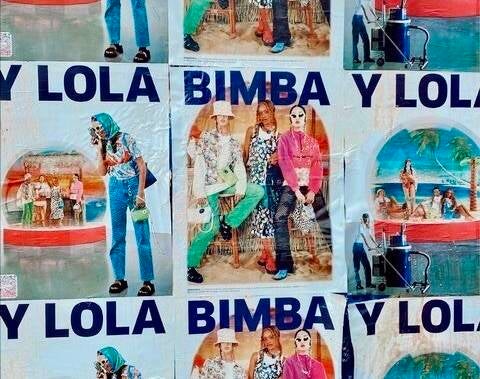
Shop Bimba Y Lola here (they have sale right now)
So I think we can conclude that Spain is a fashion capital? I dont think this article was meant to convince you but more to show what amazing brands and empires come from this country. Of course we are biased because we both live in Spain but honestly I think the work ethic and the talents/ passions they have here in Spain, and ESPECIALLY in Galicia where literally 80% of the brands mentioned above were created, are just insane. Especially during our interview with the ex- freelance designer at Zara I really realised how the Spanish go about their businesses. They are so fierce!! They will fall down 10 times and still stand back up again and create one of the most successful businesses on earth right now.
Walking through Spain makes you realise how many people have that dream and are actively chasing it with their shops, even if it's just one shop, that might just be for now...!
Add comment
Comments